1K
Loading Reference Work…
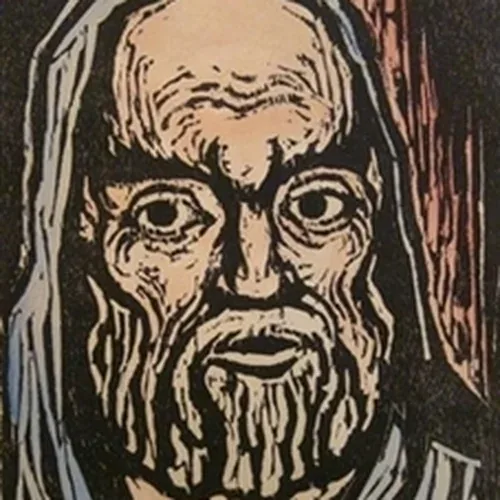
“1st-century rabbi and Jewish leader”
Yohanan ben Zakkai, sometimes abbreviated as ריב״ז ribaz for Rabbi Yohanan ben Zakkai, was a tanna, an important Jewish sage during the late Second Temple period during the transformative post-destruction era. He was a primary contributor to the core text of Rabbinic Judaism, the Mishnah. His name is often preceded by the honorific title Rabban. He is widely regarded as one of the most important Jewish figures of his time, and his escape from the Roman destruction of Jerusalem may have been instrumental in Rabbinic Judaism's survival post-Temple. His tomb is located in Tiberias within the Maimonides burial compound.
In 70 CE, the Roman legions under Titus breached Jerusalem, destroyed the Second Temple, slaughtered hundreds of thousands, and extinguished the sacrificial system, threatening the total extinction of the Jewish religion.
Smuggled out of besieged Jerusalem in a coffin, Yohanan met the Roman commander Vespasian, prophesied his rise to Emperor, and secured permission to establish an academy in the coastal town of Yavne ("Give me Yavne and its sages!"), replacing animal sacrifice with deeds of lovingkindness (*Gemilut Hasadim*) and prayer.
Single-handedly engineered the survival and rebirth of the Jewish people by pivoting Judaism from a Temple-and-sacrifice religion into a portable, community-centered religion of Torah study, synagogue prayer, and moral action.
The escape from besieged Jerusalem and the historic request of Vespasian: "Give me Yavne and its sages."
Tracing the downstream transmission from Yohanan ben Zakkai’s initial intervention through immediate adapters, institutionalization, and enduring consequences in human history.
Smuggled out of besieged Jerusalem in a coffin, Yohanan met the Roman commander Vespasian, prophesied his rise to Emperor, and secured permission to establish an academy in the coastal town of Yavne ("Give me Yavne and its sages!"), replacing animal sacrifice with deeds of lovingkindness (*Gemilut Hasadim*) and prayer.
Rulings, codes, and hermeneutic principles incorporated into yeshiva curricula and communal adjudication.
Commentaries, codes, and responsa accepted as authoritative standards by Diaspora communities.
Without Yohanan ben Zakkai’s vision at Yavne, Judaism would have died in the burning ashes of the Second Temple alongside the Zealots, just as ancient civilizations vanished when their national temples fell.
How many people, institutions, societies, or disciplines were affected?
Yohanan ben Zakkai: Details the Yavne revolution as the definitive watershed moment that created Rabbinic Judaism for the next two millennia.
[Talmud Bavli Gittin 56a–b] The escape from besieged Jerusalem and the historic request of Vespasian: "Give me Yavne and its sages."
[Avot de-Rabbi Natan Chapter 4] Comforting Rabbi Joshua gazing at the ruined Temple: "Be not grieved, my son; we have another atonement equal to it, namely deeds of lovingkindness."
Comforting Rabbi Joshua gazing at the ruined Temple: "Be not grieved, my son; we have another atonement equal to it, namely deeds of lovingkindness."
Details the Yavne revolution as the definitive watershed moment that created Rabbinic Judaism for the next two millennia.
Integrated into daily liturgy, lifecycle rites, and Jewish constitutional identity worldwide.
Single-handedly engineered the survival and rebirth of the Jewish people by pivoting Judaism from a Temple-and-sacrifice religion into a portable, community-centered religion of Torah study, synagogue prayer, and moral action.
How fundamentally did they alter the structural state of the field or world?
Did the consequences endure decades, centuries, or millennia?
Did they introduce a genuinely new paradigm vs. incremental refinement?
Would this change have happened without this specific individual?
How crucial to Jewish civilization, Torah, ethics, or Israel?
Comprehensive multi-dimensional evaluation of civilizational reach, conceptual depth, duration of legacy, and historical causation across Jewish and world history.