1K
Loading Reference Work…
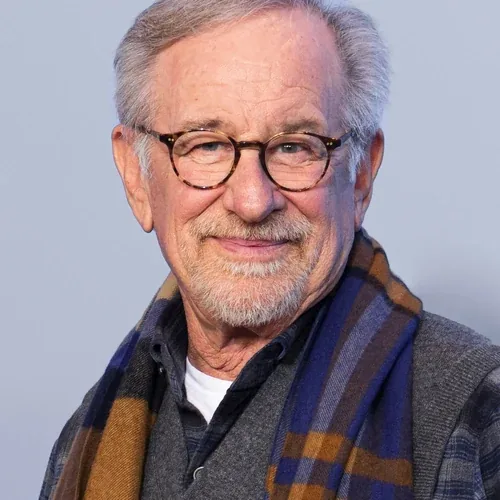
“American filmmaker (born 1946)”
Steven Allan Spielberg is an American filmmaker. A major figure of the New Hollywood era and pioneer of the modern blockbuster, Spielberg is widely regarded as one of the greatest and most influential filmmakers in the history of cinema and is the highest-grossing film director of all time, with his films having earned almost $11 billion worldwide. Among other accolades, he has received three Academy Awards, four Golden Globe Awards, four BAFTA Awards, twelve Emmy Awards, a Tony Award, and a Grammy Award, as well as the AFI Life Achievement Award in 1995, an honorary knighthood in 2001, the Kennedy Center Honor in 2006, the Cecil B. DeMille Award in 2009, the Presidential Medal of Freedom in 2015, and the National Medal of Arts in 2023. According to Forbes, he is one of the world's wealthiest celebrities, with a net worth of at least $5.3 billion. He is one of 22 people to achieve EGOT status.
Practices and discourse in Film, Television & Production were shaped by prevailing generational conventions and historical constraints.
Delivered innovative leadership, foundational insights, or creative works that permanently altered the frontier of Film, Television & Production.
Established precedents, standards of excellence, and cultural milestones that endure in contemporary society.
Tracing the downstream transmission from Steven Spielberg’s initial intervention through immediate adapters, institutionalization, and enduring consequences in human history.
Delivered innovative leadership, foundational insights, or creative works that permanently altered the frontier of Film, Television & Production.
Published treatises and dialectic essays debated across academies, courts, and international peer networks.
Adopted by subsequent generations of thinkers, writers, and artists who built directly upon these foundational concepts.
Without their decisive contributions, the historical development of Film, Television & Production would have unfolded along a more diminished trajectory.
How many people, institutions, societies, or disciplines were affected?
Incorporated into the permanent canon of human civilization, political philosophy, or world literature.
Established precedents, standards of excellence, and cultural milestones that endure in contemporary society.
How fundamentally did they alter the structural state of the field or world?
Did the consequences endure decades, centuries, or millennia?
Did they introduce a genuinely new paradigm vs. incremental refinement?
Would this change have happened without this specific individual?
How crucial to Jewish civilization, Torah, ethics, or Israel?
Comprehensive multi-dimensional evaluation of civilizational reach, conceptual depth, duration of legacy, and historical causation across Jewish and world history.