1K
Loading Reference Work…
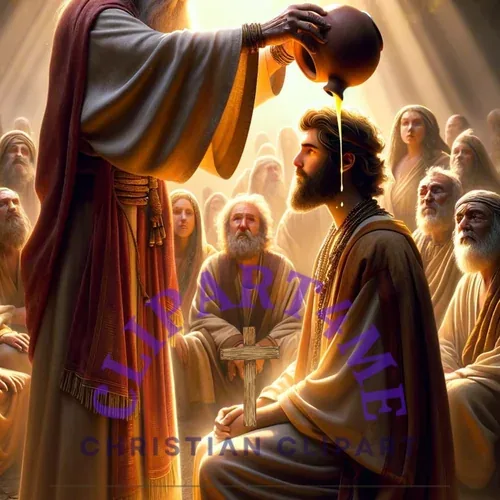
“Biblical figure and Israelite monarch”
Saul was a monarch of ancient Israel and Judah and, according to the Hebrew Bible and Old Testament, the first king of the United Monarchy. His reign, traditionally placed in the late eleventh century BC, marked the transition of the Israelites from a scattered tribal society ruled by various judges to organized statehood.
Israel was a fractured tribal collection under the heel of Philistine garrisons who monopolized iron blacksmithing, leaving Israel without weapons or defensive coordination.
Anointed by Samuel as the inaugural king of Israel, Saul mobilized the tribal militia to rescue Jabesh-Gilead from Ammonite cruelty and drove back Philistine forces, establishing Israel’s first standing military forces.
Demonstrated the feasibility of a unified pan-Israelite state while serving as the tragic, enduring archetype of a monarch bound by divine law whose disobedience forfeited dynastic succession.
Tracing the downstream transmission from Saul’s initial intervention through immediate adapters, institutionalization, and enduring consequences in human history.
Anointed by Samuel as the inaugural king of Israel, Saul mobilized the tribal militia to rescue Jabesh-Gilead from Ammonite cruelty and drove back Philistine forces, establishing Israel’s first standing military forces.
Rulings, codes, and hermeneutic principles incorporated into yeshiva curricula and communal adjudication.
Commentaries, codes, and responsa accepted as authoritative standards by Diaspora communities.
Prophetic anointing of Israel’s first monarch.
Under editorial review.
Without Saul’s initial military campaigns, the Philistines would have crushed the central highlands, preventing the later consolidation and rise of the Davidic dynasty.
How many people, institutions, societies, or disciplines were affected?
Saul: Presents Saul’s reign as a poignant, complex tragedy exploring the inherent theological tensions between human monarchy and divine kingship.
[1 Samuel 11:1–15] Saul’s spirit-filled rescue of Jabesh-Gilead and his coronation at Gilgal by all the people.
Saul’s spirit-filled rescue of Jabesh-Gilead and his coronation at Gilgal by all the people.
Presents Saul’s reign as a poignant, complex tragedy exploring the inherent theological tensions between human monarchy and divine kingship.
Integrated into daily liturgy, lifecycle rites, and Jewish constitutional identity worldwide.
Demonstrated the feasibility of a unified pan-Israelite state while serving as the tragic, enduring archetype of a monarch bound by divine law whose disobedience forfeited dynastic succession.
How fundamentally did they alter the structural state of the field or world?
Did the consequences endure decades, centuries, or millennia?
Did they introduce a genuinely new paradigm vs. incremental refinement?
Would this change have happened without this specific individual?
How crucial to Jewish civilization, Torah, ethics, or Israel?
Comprehensive multi-dimensional evaluation of civilizational reach, conceptual depth, duration of legacy, and historical causation across Jewish and world history.