1K
Loading Reference Work…
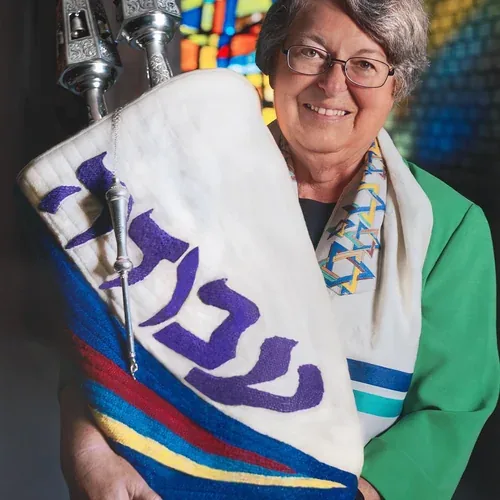
“First female ordained rabbi in America (born 1946)”
Sally Jane Priesand is America's first female rabbi ordained by a rabbinical seminary, and the second formally ordained female rabbi in Jewish history, after Regina Jonas. Priesand was ordained by the Hebrew Union College-Jewish Institute of Religion on June 3, 1972, at the Plum Street Temple in Cincinnati. After her ordination she served first as assistant and then as associate rabbi at Stephen Wise Free Synagogue in New York City, and later led Monmouth Reform Temple in Tinton Falls, New Jersey from 1981 until her retirement in 2006. She is featured in numerous books including Rabbis: The Many Faces of Judaism and Fifty Jewish Women who Changed the World.
Practices and discourse in Modern Rabbis & Religious Leaders were shaped by prevailing generational conventions and historical constraints.
Delivered innovative leadership, foundational insights, or creative works that permanently altered the frontier of Modern Rabbis & Religious Leaders.
Established precedents, standards of excellence, and cultural milestones that endure in contemporary society.
Tracing the downstream transmission from Sally Priesand’s initial intervention through immediate adapters, institutionalization, and enduring consequences in human history.
Delivered innovative leadership, foundational insights, or creative works that permanently altered the frontier of Modern Rabbis & Religious Leaders.
Rulings, codes, and hermeneutic principles incorporated into yeshiva curricula and communal adjudication.
Commentaries, codes, and responsa accepted as authoritative standards by Diaspora communities.
Without their decisive contributions, the historical development of Modern Rabbis & Religious Leaders would have unfolded along a more diminished trajectory.
How many people, institutions, societies, or disciplines were affected?
Integrated into daily liturgy, lifecycle rites, and Jewish constitutional identity worldwide.
Established precedents, standards of excellence, and cultural milestones that endure in contemporary society.
How fundamentally did they alter the structural state of the field or world?
Did the consequences endure decades, centuries, or millennia?
Did they introduce a genuinely new paradigm vs. incremental refinement?
Would this change have happened without this specific individual?
How crucial to Jewish civilization, Torah, ethics, or Israel?
Comprehensive multi-dimensional evaluation of civilizational reach, conceptual depth, duration of legacy, and historical causation across Jewish and world history.