1K
Loading Reference Work…
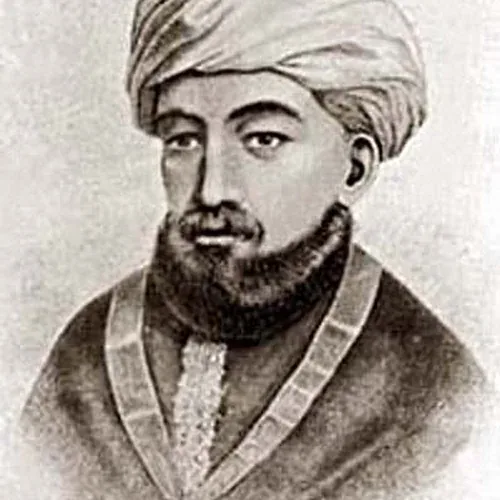
“The intellectual colossus of the medieval Jewish world, whose codification of Jewish law and synthesis of Aristotelian philosophy and Torah reshaped both rabbinic tradition and Western philosophy.”
Rabbi Moshe ben Maimon, known to the Western world as Maimonides and in Jewish tradition by the acronym Rambam (1138–1204), was a Sephardic philosopher, physician to the Egyptian royal court, communal leader, and jurist. His Mishneh Torah reorganized the entire corpus of biblical and rabbinic law into a lucid, encyclopedic 14-volume code, while his philosophical masterwork, The Guide for the Perplexed, profoundly influenced Christian scholastics (such as Thomas Aquinas) and modern philosophers (such as Spinoza).
Jewish law was dispersed across the labyrinthine and unindexed Talmudic folios, while medieval philosophy lacked a rigorous synthesis between Aristotelian rationalism and biblical revelation.
Codified the entirety of oral law into the Mishneh Torah (the first comprehensive legal code in Jewish history) and authored The Guide for the Perplexed, harmonizing Torah with Aristotelian reason.
Established the bedrock of all subsequent Jewish jurisprudence (directly foundational to the Shulchan Aruch) and decisively influenced Christian Scholasticism (Thomas Aquinas) and modern philosophy (Spinoza).
Tracing the downstream transmission from Moses Maimonides (Rambam)’s initial intervention through immediate adapters, institutionalization, and enduring consequences in human history.
Codified the entirety of oral law into the Mishneh Torah (the first comprehensive legal code in Jewish history) and authored The Guide for the Perplexed, harmonizing Torah with Aristotelian reason.
Rulings, codes, and hermeneutic principles incorporated into yeshiva curricula and communal adjudication.
Commentaries, codes, and responsa accepted as authoritative standards by Diaspora communities.
Organized all Jewish statutory and common law into 14 thematic treatises without precedent in legal history.
Established the canonical criteria for Jewish theological orthodoxy and divine incorporeality.
Authored 10 seminal medical treatises on asthma, toxicology, hygiene, and clinical diagnostics as court physician to Saladin.
Formulated the Thirteen Principles of Jewish Faith (Sheloshah Asar Ikkarim).
The fourteen-volume masterpiece codifying all biblical and rabbinic law into clear thematic order.
Pioneered rationalist theology, negative theology (apophaticism), and allegorical biblical hermeneutics.
Maimonides named his code Mishneh Torah after the Mosaic code; epitaph: "From Moses to Moses, none arose like Moses."
Rashi’s Talmudic elucidations laid the textual bedrock that enabled Maimonides to formulate the Mishneh Torah.
Pioneered Judeo-Arabic philosophical harmonization of reason and revelation that Maimonides expanded.
Spinoza’s critique of miracles and biblical interpretation was heavily formed by engaging Maimonides’ Guide for the Perplexed.
Maimonides was one of the three foundational pillars of the Shulchan Aruch.
Methodological Standard: Jewish identity is strictly documented and never inferred from surnames, physical appearance, geography, or stereotypes. Every profile separates identity claims from verified sources.
Born in Córdoba to Rabbi Maimon ben Joseph, a renowned rabbinic judge traced back to the line of King David.
Unbroken documentary record; Nagid (leader) of the Egyptian Jewish community; chief rabbi of Fustat.
Without Maimonides, halakha would have remained fragmented and inaccessible to widespread diaspora communities, and Jewish intellectual history would have leaned heavily toward mysticism without an authoritative rationalist ballast.
How many people, institutions, societies, or disciplines were affected?
Maimonides served as personal physician to Saladin’s grand vizier and son Al-Afdal in Cairo.
Thomas Aquinas cited Maimonides ("Rabbi Moses") extensively in the Summa Theologiae.
Examines Maimonides’ revolutionary legal codification and theological challenges in Islamic Cairo.
Integrated into daily liturgy, lifecycle rites, and Jewish constitutional identity worldwide.
Established the bedrock of all subsequent Jewish jurisprudence (directly foundational to the Shulchan Aruch) and decisively influenced Christian Scholasticism (Thomas Aquinas) and modern philosophy (Spinoza).
How fundamentally did they alter the structural state of the field or world?
Did the consequences endure decades, centuries, or millennia?
Did they introduce a genuinely new paradigm vs. incremental refinement?
Would this change have happened without this specific individual?
How crucial to Jewish civilization, Torah, ethics, or Israel?
The definitive halakhic codifier and philosophical benchmark of Jewish civilization whose impact bridged Judaism, Islam, and Christianity.