1K
Loading Reference Work…
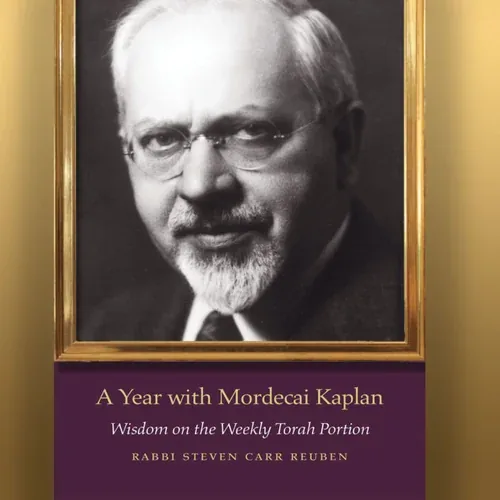
“Lithuanian American rabbi (1881–1983)”
Mordecai Menahem Kaplan was an American Conservative rabbi, writer, Jewish educator, professor, theologian-philosopher, activist, and religious leader who founded the Reconstructionist movement of Judaism with his son-in-law, Rabbi Ira Eisenstein. He has been described as a "towering figure" in the recent history of Judaism for his influential work in adapting it to modern society, contending that Judaism should be a unifying and creative force by stressing the cultural and historical character of the religion as well as theological doctrine.
Practices and discourse in Modern Rabbis & Religious Leaders were shaped by prevailing generational conventions and historical constraints.
Delivered innovative leadership, foundational insights, or creative works that permanently altered the frontier of Modern Rabbis & Religious Leaders.
Established precedents, standards of excellence, and cultural milestones that endure in contemporary society.
Tracing the downstream transmission from Mordecai Kaplan’s initial intervention through immediate adapters, institutionalization, and enduring consequences in human history.
Delivered innovative leadership, foundational insights, or creative works that permanently altered the frontier of Modern Rabbis & Religious Leaders.
Rulings, codes, and hermeneutic principles incorporated into yeshiva curricula and communal adjudication.
Commentaries, codes, and responsa accepted as authoritative standards by Diaspora communities.
Without their decisive contributions, the historical development of Modern Rabbis & Religious Leaders would have unfolded along a more diminished trajectory.
How many people, institutions, societies, or disciplines were affected?
Integrated into daily liturgy, lifecycle rites, and Jewish constitutional identity worldwide.
Established precedents, standards of excellence, and cultural milestones that endure in contemporary society.
How fundamentally did they alter the structural state of the field or world?
Did the consequences endure decades, centuries, or millennia?
Did they introduce a genuinely new paradigm vs. incremental refinement?
Would this change have happened without this specific individual?
How crucial to Jewish civilization, Torah, ethics, or Israel?
Comprehensive multi-dimensional evaluation of civilizational reach, conceptual depth, duration of legacy, and historical causation across Jewish and world history.