1K
Loading Reference Work…
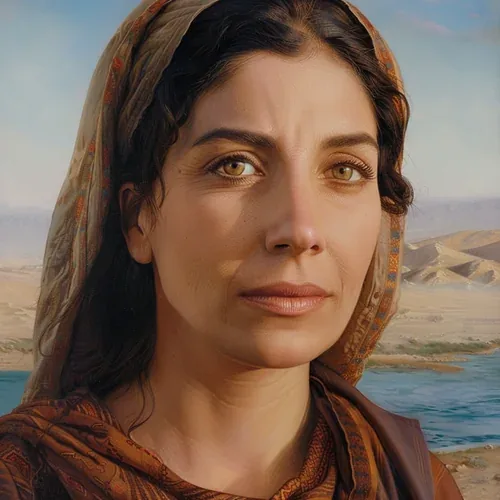
“Sister of Moses and Aaron”
Miriam is described in the Hebrew Bible as the daughter of Amram and Jochebed, and the older sister of Moses and Aaron. She was a prophetess and first appears in the Book of Exodus.
Pharaoh’s genocidal decree mandated the drowning of every newborn Hebrew boy in the Nile, threatening the extermination of Israel in Egyptian captivity.
Miriam watched over the infant Moses in the Nile reeds, secured his mother Jochebed as his royal nurse, led the Israelite women with timbrels and dancing in choral thanksgiving at the Red Sea, and served as prophetess alongside Moses and Aaron.
Revered in biblical tradition as one of the three divinely sent leaders of the Exodus (Micah 6:4: "I sent before you Moses, Aaron, and Miriam"), associated in rabbinic lore with the miraculous traveling well of fresh water.
Tracing the downstream transmission from Miriam’s initial intervention through immediate adapters, institutionalization, and enduring consequences in human history.
Miriam watched over the infant Moses in the Nile reeds, secured his mother Jochebed as his royal nurse, led the Israelite women with timbrels and dancing in choral thanksgiving at the Red Sea, and served as prophetess alongside Moses and Aaron.
Rulings, codes, and hermeneutic principles incorporated into yeshiva curricula and communal adjudication.
Commentaries, codes, and responsa accepted as authoritative standards by Diaspora communities.
Without Miriam’s alert courage at the Nile, infant Moses would have been killed or raised as an Egyptian prince without awareness of his Hebrew heritage.
How many people, institutions, societies, or disciplines were affected?
Miriam: Examines Miriam’s leadership as a prophetess and public singer of epic victory poetry at the dawn of Israel’s nationhood.
[Exodus 15:20–21] Song of the Sea: Miriam takes a timbrel and leads all the women in triumph: "Sing to the Lord, for He has triumphed gloriously."
[Micah 6:4] Prophetic affirmation of Miriam’s co-equal leadership: "I sent before you Moses, Aaron, and Miriam."
Song of the Sea: Miriam takes a timbrel and leads all the women in triumph: "Sing to the Lord, for He has triumphed gloriously."
Prophetic affirmation of Miriam’s co-equal leadership: "I sent before you Moses, Aaron, and Miriam."
Examines Miriam’s leadership as a prophetess and public singer of epic victory poetry at the dawn of Israel’s nationhood.
Integrated into daily liturgy, lifecycle rites, and Jewish constitutional identity worldwide.
Revered in biblical tradition as one of the three divinely sent leaders of the Exodus (Micah 6:4: "I sent before you Moses, Aaron, and Miriam"), associated in rabbinic lore with the miraculous traveling well of fresh water.
How fundamentally did they alter the structural state of the field or world?
Did the consequences endure decades, centuries, or millennia?
Did they introduce a genuinely new paradigm vs. incremental refinement?
Would this change have happened without this specific individual?
How crucial to Jewish civilization, Torah, ethics, or Israel?
Comprehensive multi-dimensional evaluation of civilizational reach, conceptual depth, duration of legacy, and historical causation across Jewish and world history.