1K
Loading Reference Work…
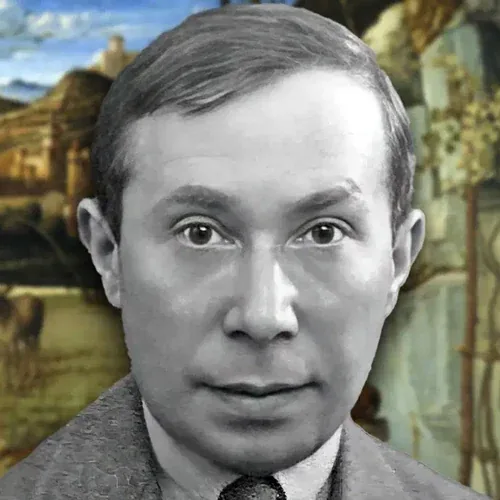
“American political philosopher (1899–1973)”
Leo Strauss was a German-American political philosopher and historian of philosophy whose work greatly influenced twentieth-century political theory in the United States and the study of classical political thought. He is known best for his interpretation of ancient and medieval philosophy, his account of classical natural right, and his claim that philosophers often wrote esoterically, presenting different teachings to general and specialist readers. Strauss argued that the modern turn in philosophy, beginning with Niccolò Machiavelli and culminating in historicism and relativism, marked a decisive break with the classical understanding of politics and the good life. His work sought to recover the questions and methods of ancient political philosophy as a corrective to the perceived crisis of modern thought.
Intellectual paradigms were bounded by traditional scholastic metaphysics and regional philosophical orthodoxies.
Constructed influential philosophical, ethical, or analytical frameworks that reshaped modern intellectual inquiry.
Their conceptual vocabulary and analytical models remain central across universities, cultural debate, and human sciences.
Tracing the downstream transmission from Leo Strauss’s initial intervention through immediate adapters, institutionalization, and enduring consequences in human history.
Constructed influential philosophical, ethical, or analytical frameworks that reshaped modern intellectual inquiry.
Published treatises and dialectic essays debated across academies, courts, and international peer networks.
Adopted by subsequent generations of thinkers, writers, and artists who built directly upon these foundational concepts.
Without their intellectual contributions, modern social and philosophical thought would lack its defining critical paradigms.
How many people, institutions, societies, or disciplines were affected?
Incorporated into the permanent canon of human civilization, political philosophy, or world literature.
Their conceptual vocabulary and analytical models remain central across universities, cultural debate, and human sciences.
How fundamentally did they alter the structural state of the field or world?
Did the consequences endure decades, centuries, or millennia?
Did they introduce a genuinely new paradigm vs. incremental refinement?
Would this change have happened without this specific individual?
How crucial to Jewish civilization, Torah, ethics, or Israel?
Comprehensive multi-dimensional evaluation of civilizational reach, conceptual depth, duration of legacy, and historical causation across Jewish and world history.