1K
Loading Reference Work…
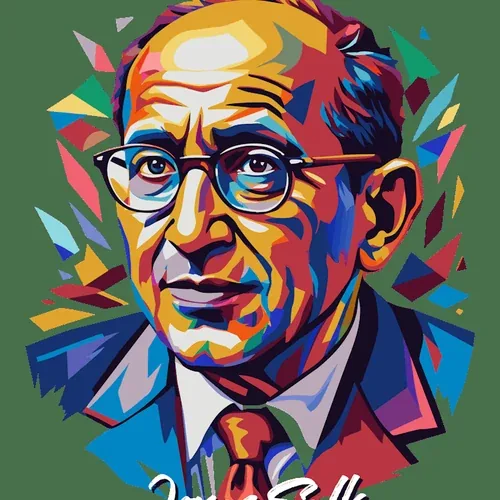
“The medical visionary who developed the first effective inactivated polio vaccine, liberating generations of children worldwide from paralysis and refusing to patent the formula for profit.”
Jonas Edward Salk (1914–1995) was an American virologist and medical researcher who conquered one of the 20th century’s most terrifying epidemic diseases: poliomyelitis. Working at the University of Pittsburgh, Salk challenged the scientific consensus by developing a safe, killed-virus (inactivated) vaccine. Following nationwide clinical trials involving 1.8 million children in 1954, the vaccine was declared safe and effective in 1955. When famously asked who owned the patent, Salk replied: "Well, the people, I would say. There is no patent. Could you patent the sun?"
Poliomyelitis crippled and paralyzed hundreds of thousands of children annually across the globe, with summer outbreaks causing widespread panic and no effective preventative immunization.
Developed the first safe and effective killed-virus polio vaccine (1955) and famously refused to patent it, proclaiming: "Could you patent the sun?" to ensure universal global access.
Virtually eradicated one of humanity’s most devastating paralytic diseases, established modern virological immunization standards, and founded the Salk Institute for Biological Studies.
Tracing the downstream transmission from Jonas Salk’s initial intervention through immediate adapters, institutionalization, and enduring consequences in human history.
Developed the first safe and effective killed-virus polio vaccine (1955) and famously refused to patent it, proclaiming: "Could you patent the sun?" to ensure universal global access.
Hypotheses subjected to empirical testing, mathematical formulation, and international peer replication during the Postwar Period, 1945–1990.
Formulations integrated into university curricula, national laboratories, and engineering applications.
Formulated, tested, and deployed the formalin-inactivated polio vaccine, leading to a 90% drop in polio cases within two years.
Established the premier research center in La Jolla, California, bringing together world-class biologists and humanists.
Reported successful immunization results of inactivated virus in human clinical trials.
Methodological Standard: Jewish identity is strictly documented and never inferred from surnames, physical appearance, geography, or stereotypes. Every profile separates identity claims from verified sources.
Born in New York City to Daniel and Dora Salk, Ashkenazi Jewish immigrants from Poland and Lithuania.
Attended City College of New York and NYU School of Medicine; cultural and ethical identification with Jewish community.
Without Salk’s breakthrough and patent-free distribution, polio epidemics would have crippled millions more individuals throughout the latter half of the 20th century.
How many people, institutions, societies, or disciplines were affected?
On April 12, 1955, the Francis Committee declared the Salk polio vaccine "safe, effective, and potent."
Salk declined to patent the vaccine, forgoing estimated royalties of over $7 billion.
Comprehensive biography evaluating Salk’s scientific methodology, public acclaim, and institutional legacy.
Translated into widespread clinical therapies, computational architectures, or industrial technologies preserving human life.
Virtually eradicated one of humanity’s most devastating paralytic diseases, established modern virological immunization standards, and founded the Salk Institute for Biological Studies.
How fundamentally did they alter the structural state of the field or world?
Did the consequences endure decades, centuries, or millennia?
Did they introduce a genuinely new paradigm vs. incremental refinement?
Would this change have happened without this specific individual?
How crucial to Jewish civilization, Torah, ethics, or Israel?
Universal humanitarian triumph conquering an endemic epidemic disease, emblematic of the Jewish tradition of Tikkun Olam.