1K
Loading Reference Work…
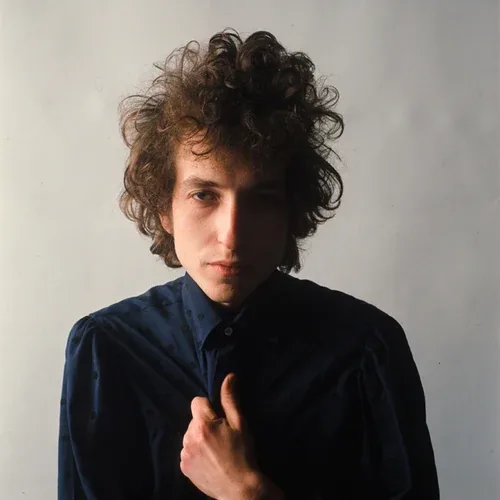
“The preeminent poet-musician of modern civilization, whose revolutionary lyrics, civil rights anthems, and literary genius earned the Nobel Prize in Literature and transformed popular culture.”
Bob Dylan (born Robert Allen Zimmerman, 1941) is an American singer-songwriter, poet, and cultural icon whose career spans six decades. Born in Duluth, Minnesota, Dylan revolutionized modern popular music by infusing folk and rock with literary depth, poetic surrealism, and moral urgency. Anthems like "Blowin’ in the Wind" and "The Times They Are a-Changin’" became touchstones of the Civil Rights and anti-war movements. In 2016, Dylan was awarded the Nobel Prize in Literature "for having created new poetic expressions within the great American song tradition."
Popular music lyrics were predominantly formulaic love songs or traditional folk tunes, distinct from serious literary poetry and philosophical commentary.
Dylan unified the poetic ambition of Rimbaud and the Beats with folk music, blues, and rock and roll, proving that popular songwriting could serve as high literature.
Transformed the trajectory of rock music, directly inspiring The Beatles, Jimi Hendrix, Bruce Springsteen, and generations of global songwriters; elevated song lyrics into Nobel-recognized literature.
Tracing the downstream transmission from Bob Dylan’s initial intervention through immediate adapters, institutionalization, and enduring consequences in human history.
Dylan unified the poetic ambition of Rimbaud and the Beats with folk music, blues, and rock and roll, proving that popular songwriting could serve as high literature.
Published treatises and dialectic essays debated across academies, courts, and international peer networks.
Adopted by subsequent generations of thinkers, writers, and artists who built directly upon these foundational concepts.
Penned the foundational moral anthem of the American Civil Rights movement, sung at the March on Washington.
Named the greatest rock song in history by Rolling Stone magazine, shattering the 3-minute pop single constraint.
First musician in history to receive the Nobel Prize in Literature.
Dylan cited Kafka’s surreal parabolic style as a direct influence on his mid-1960s songwriting.
Under editorial review.
Methodological Standard: Jewish identity is strictly documented and never inferred from surnames, physical appearance, geography, or stereotypes. Every profile separates identity claims from verified sources.
Born Robert Allen Zimmerman (Hebrew name Shabtai Zisel ben Avraham) in Duluth, Minnesota to Abram Zimmerman and Beatrice Stone.
Raised in the Hibbing Jewish community; had a traditional bar mitzvah; returned to Jewish observance in the late 1970s and 1980s, frequently studying with Chabad.
Without Dylan, 1960s counter-culture would have lacked its defining moral conscience and popular music would have taken far longer to develop poetic depth.
How many people, institutions, societies, or disciplines were affected?
Dylan was awarded the Nobel Prize in Literature in October 2016.
Dylan was awarded the Presidential Medal of Freedom by Barack Obama in 2012.
Incorporated into the permanent canon of human civilization, political philosophy, or world literature.
Transformed the trajectory of rock music, directly inspiring The Beatles, Jimi Hendrix, Bruce Springsteen, and generations of global songwriters; elevated song lyrics into Nobel-recognized literature.
How fundamentally did they alter the structural state of the field or world?
Did the consequences endure decades, centuries, or millennia?
Did they introduce a genuinely new paradigm vs. incremental refinement?
Would this change have happened without this specific individual?
How crucial to Jewish civilization, Torah, ethics, or Israel?
Unmatched global cultural and poetic impact transforming the language and conscience of modern music.