1K
Loading Reference Work…
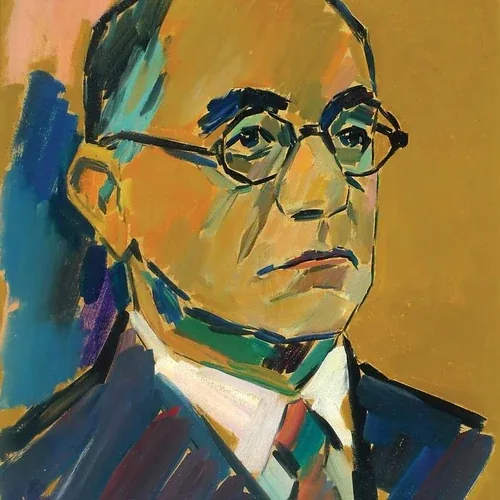
“German-Jewish Zionist (1876–1943)”
Arthur Ruppin was a German Zionist and one of the founders of the city of Tel Aviv. Appointed director of Berlin's Bureau for Jewish Statistics in 1904, he moved to Palestine in 1907, and from 1908 was the director of the Palestine Office of the Zionist Organization in Jaffa, organizing Zionist immigration to Palestine. In 1926, Ruppin joined the faculty of the Hebrew University of Jerusalem and founded the Department for the Sociology of the Jews. Described posthumously as the "founder of German-Jewish demography" and "father of Israeli sociology", his best-known sociological work was The Jews in the Modern World (1934). He was also a proponent of pseudoscientific race theory.
Jewish life in the diaspora was characterized by political vulnerability, dispersion, and reliance on host-nation toleration.
Mobilized diplomatic, economic, military, or communal leadership to establish sovereign Jewish statehood.
The sovereign State of Israel and global Jewish institutional life stand as their enduring historical legacy.
Tracing the downstream transmission from Arthur Ruppin’s initial intervention through immediate adapters, institutionalization, and enduring consequences in human history.
Mobilized diplomatic, economic, military, or communal leadership to establish sovereign Jewish statehood.
Organized geopolitical congresses, petitions, and financial instruments establishing modern state infrastructure.
Catalyzed mass demographic return, infrastructure development, and institutional state foundations in Eretz Yisrael.
Without their decisive leadership, the realization of Jewish sovereign self-determination would have faced catastrophic setbacks.
How many people, institutions, societies, or disciplines were affected?
Safeguarded Jewish collective survival and sovereign refuge following millennia of exile and dispersion.
The sovereign State of Israel and global Jewish institutional life stand as their enduring historical legacy.
How fundamentally did they alter the structural state of the field or world?
Did the consequences endure decades, centuries, or millennia?
Did they introduce a genuinely new paradigm vs. incremental refinement?
Would this change have happened without this specific individual?
How crucial to Jewish civilization, Torah, ethics, or Israel?
Comprehensive multi-dimensional evaluation of civilizational reach, conceptual depth, duration of legacy, and historical causation across Jewish and world history.