1K
Loading Reference Work…
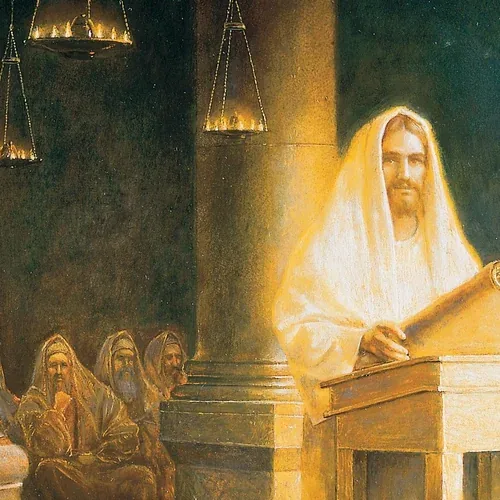
First-century Jewish preacher and religious leader
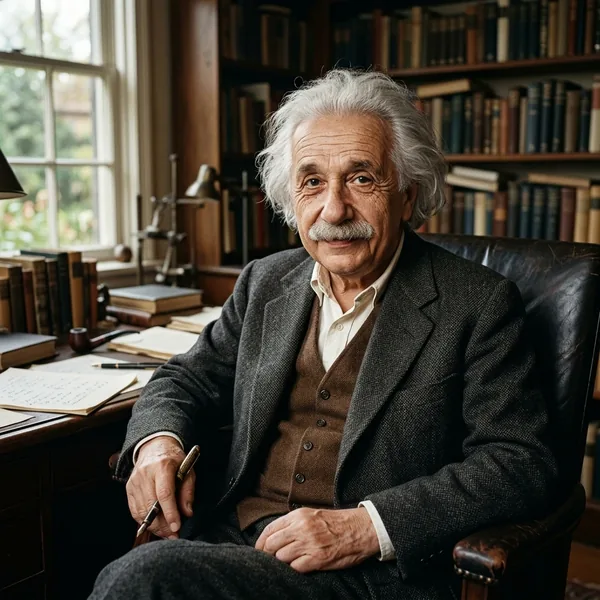
The greatest theoretical physicist of the modern era, who fundamentally revolutionized humanity’s understanding of space, time, gravity, energy, and the quantum universe.
First-century Judea was fractured under brutal Roman imperial occupation and sharp internal sectarian rivalry among Pharisees, Sadducees, Essenes, and Zealots. Apocalyptic tension was acute, ritual purity was centered strictly on the Jerusalem Temple, and Gentile nations stood largely outside the covenantal ethics of Israel.
Jesus launched an itinerant Galilean ministry proclaiming the imminent Kingdom of God, articulating radical covenantal inwardness in the Sermon on the Mount (elevating love of enemies, mercy over strict sacrifice, and universal beatitudes), and presenting his own life, death, and resurrection as the cosmic fulfillment of Israel’s redemptive hope.
Catalyzed the birth of Christianity, bringing Hebrew monotheism, biblical ethics, and the Abrahamic narrative to billions of Gentiles worldwide, establishing hospital systems, universal human rights paradigms, Western moral philosophy, and profoundly reshaping the course of global civilization.
Classical Newtonian physics rested on absolute time and Euclidean three-dimensional space, leaving electrodynamics, the constancy of light speed, and mercury orbital anomalies unexplained.
Formulated Special and General Relativity, proved the photon quantum hypothesis via the photoelectric effect, and derived mass-energy equivalence (E=mc²), permanently revolutionizing modern cosmology and quantum foundations.
The cosmic architecture of the universe was unified into dynamic curved spacetime, enabling quantum optics, atomic energy, astrophysics, GPS satellite networks, and the modern standard model.