1K
Loading Reference Work…
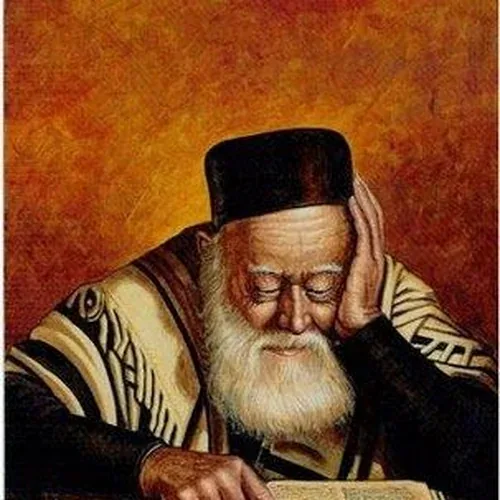
Jewish sage (c. 110 BCE – 10 CE)
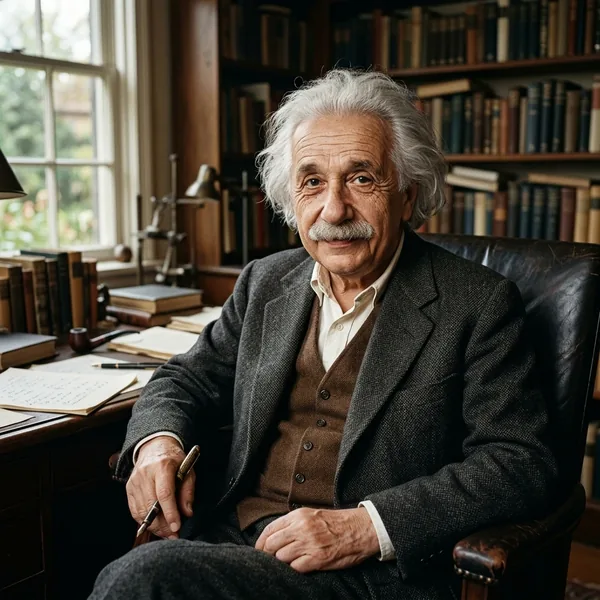
The greatest theoretical physicist of the modern era, who fundamentally revolutionized humanity’s understanding of space, time, gravity, energy, and the quantum universe.
First-century BCE Jewish jurisprudence was increasingly rigid and stratified, while commercial debt laws under the Sabbatical year were unintentionally freezing loans to the poor, threatening social welfare.
Serving as Nasi of the Sanhedrin, Hillel formulated seven hermeneutical rules (*Middot*) for deriving law from scripture, enacted the *Prozbul* ordinance to keep credit flowing to the needy, and summarized the entire Torah to a prospective convert on one foot: "What is hateful to you, do not do to your fellow; this is the whole Torah, the rest is commentary—go and study."
His academy (Beit Hillel) permanently established the compassionate, people-centered ethos of Rabbinic Judaism, and his dynasty guided the Jewish people through centuries of patriarchal leadership.
Classical Newtonian physics rested on absolute time and Euclidean three-dimensional space, leaving electrodynamics, the constancy of light speed, and mercury orbital anomalies unexplained.
Formulated Special and General Relativity, proved the photon quantum hypothesis via the photoelectric effect, and derived mass-energy equivalence (E=mc²), permanently revolutionizing modern cosmology and quantum foundations.
The cosmic architecture of the universe was unified into dynamic curved spacetime, enabling quantum optics, atomic energy, astrophysics, GPS satellite networks, and the modern standard model.